Fantasy RPG
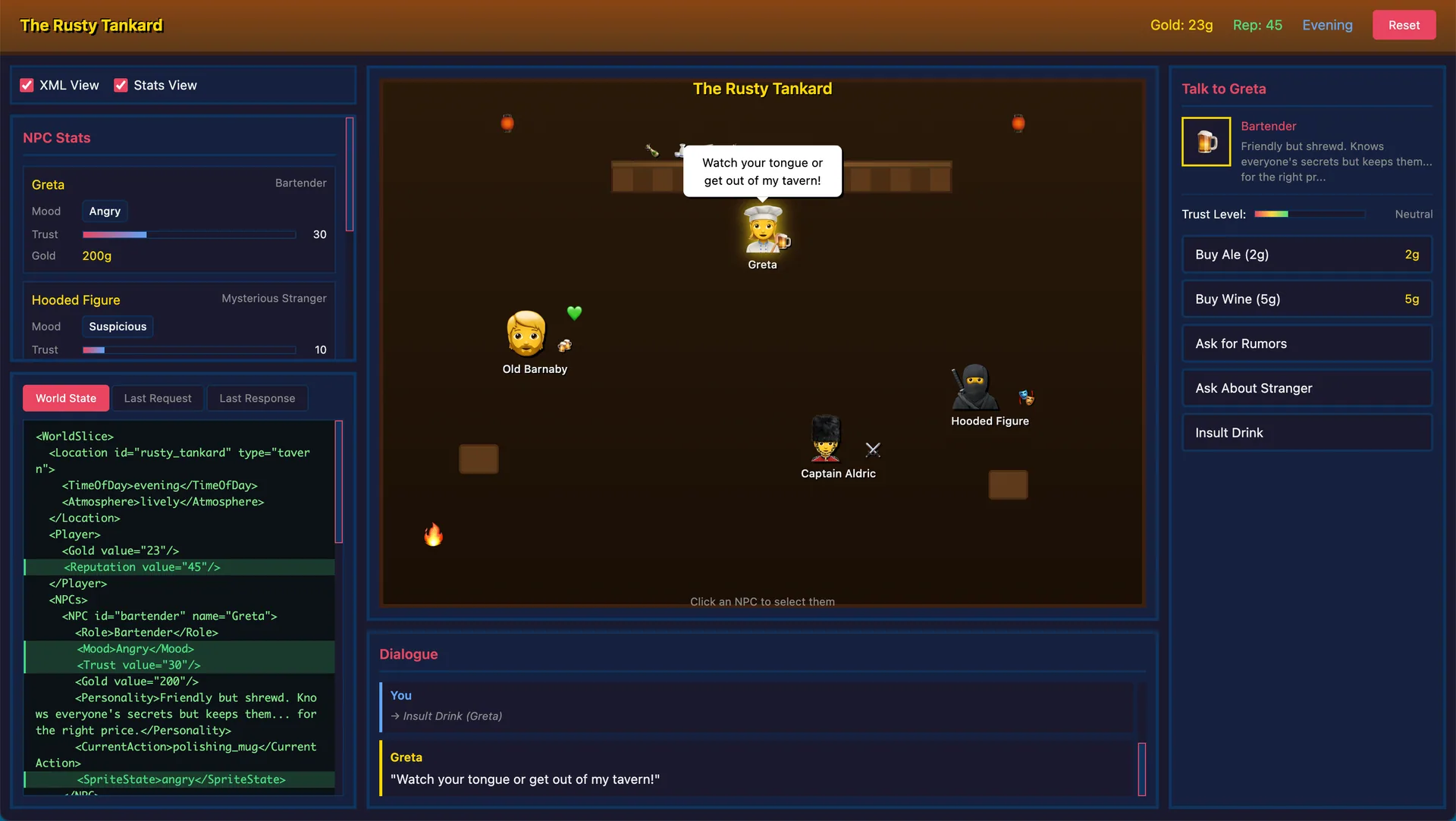
01Tavern NPCs with moods, trust levels, and dialogue that shifts based on player actions. Insult the bartender and she remembers.
The runtime layer
Director reads game state, makes narrative decisions, and returns validated parameter updates. On-device. Within your rules. Every time.
What is Director?
LoreWeaver Director is a runtime AI Game Master that reads your game state and makes constraint-validated narrative decisions in real time. It orchestrates NPC behavior, plot progression, and emergent events based on the world designed in Architect, and runs entirely on-device with no cloud dependency or per-token fees. Director integrates with Unreal, Unity, Godot, and custom engines, and is free until launch. After launch, it takes 1% of gross revenue above the first 100,000 EUR.
On-device
No cloud dependency
Validated
Checked against your rules
Fixed cost
No per-token fees
Any engine
Unreal, Unity, Godot, custom
01The problem
Players expect worlds that feel alive. Most games still rely on systems that look complex but feel predictable.
Pre-authored branches players exhaust quickly. Same lines, every playthrough.
Quests that play out the same way regardless of what the player actually does.
Characters with no memory. Save their life, they still greet you like a stranger.
02How it works
Six things Director does at runtime
01Constraints
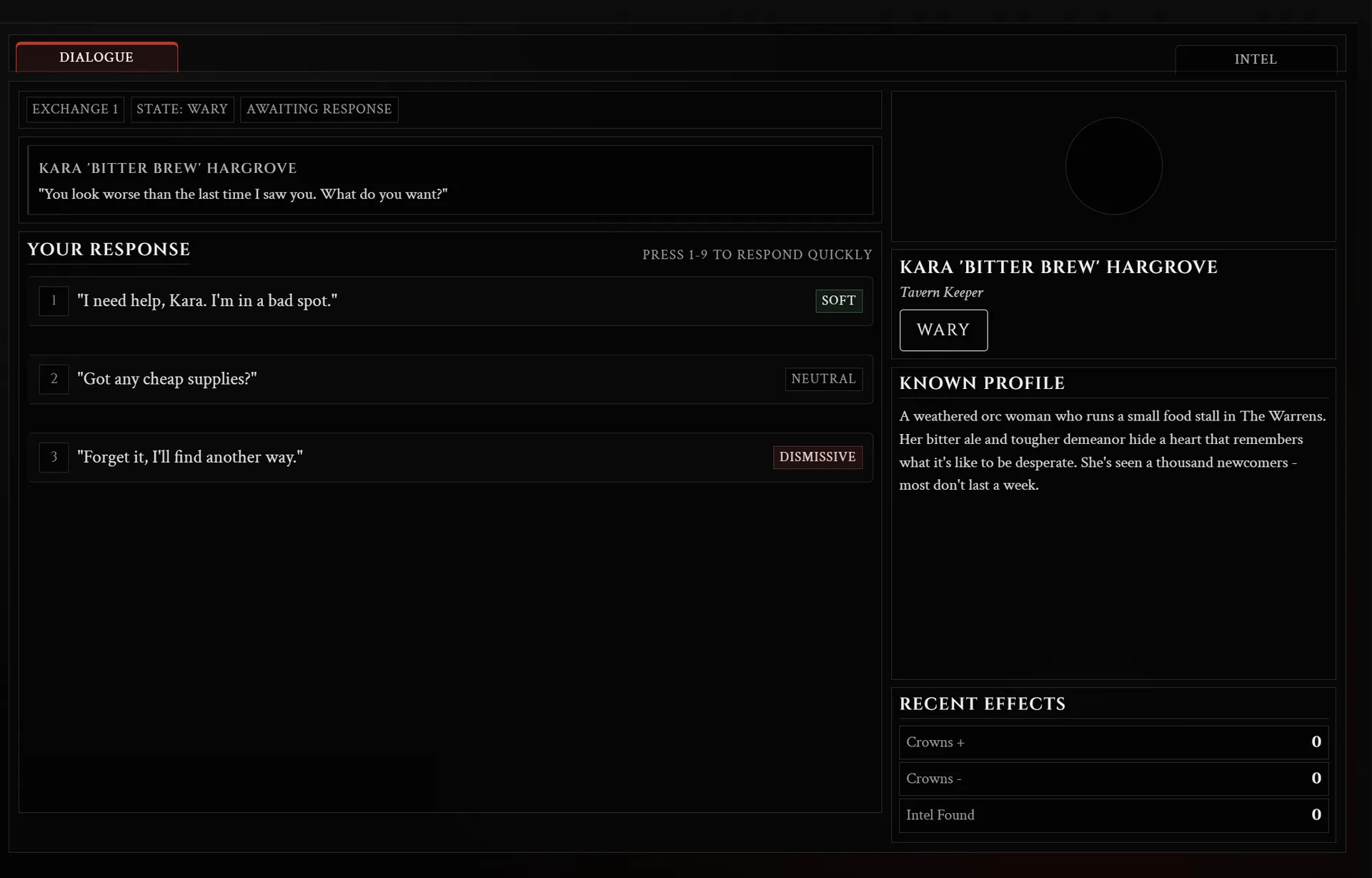
Define your game state as parameters with types, ranges, and mutability. Director operates within those boundaries. If the LLM tries to break a rule, Director rejects it.
02Decisions
Your engine sends a snapshot of the current scene. Director returns validated updates. JSON or XML in, same format back. One API call.
03Memory
Characters with real memory and relationships that evolve over time. Help someone, betray someone, ignore someone. They remember.
04Emergence
Director creates narrative arcs from gameplay, not scripts. Player actions shape what happens next. Consequences propagate through the world. No two playthroughs are the same.
05Dialogue
Director generates dialogue from the full context of what has happened, who is speaking, and what is at stake. Consistent character voice. No hardcoded branches.
06Generation
Director creates new characters, factions, quests, and rivals at runtime. Each one shaped by the current state of your world. Not random. Contextual.
03Control
Director is designed for real production environments. You stay in control. Director handles execution.
Mutable and immutable parameters. Type checking. Range enforcement. If the LLM tries to break your rules, Director rejects it.
You define what Director can change and what it cannot. Personality stays locked. Mood can shift. You set every boundary.
Control how much creative freedom Director has. From strict lore enforcement to full improvisation, you set the dial.
Works with your engine
 Unreal Engine
 Unity
Unity Godot
Godot04In the field
Director powers narrative systems across wildly different game types. Same engine. Different worlds.
Tavern NPCs with moods, trust levels, and dialogue that shifts based on player actions. Insult the bartender and she remembers.
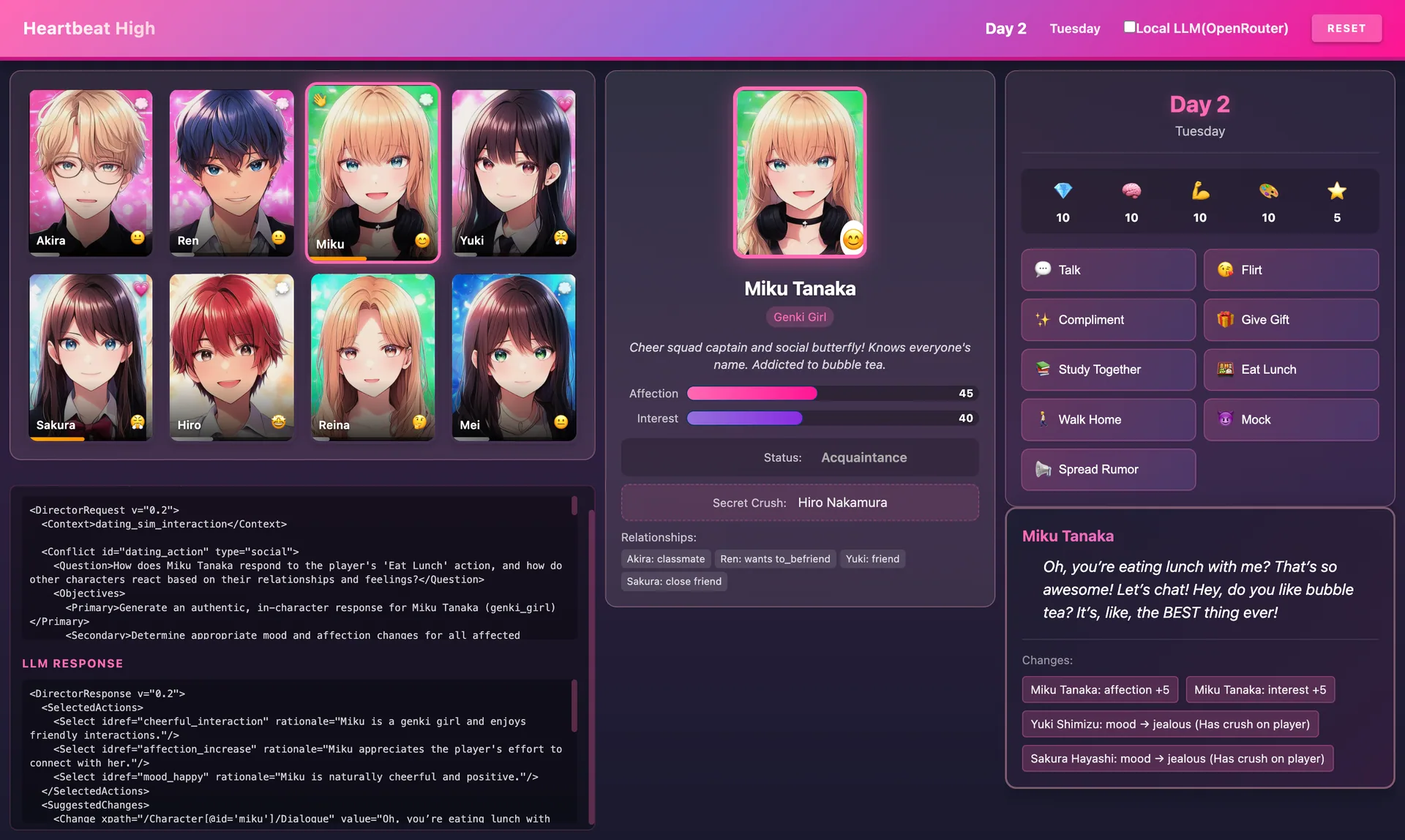
Character relationships, affection systems, and social dynamics that evolve every interaction. Friendships form and break naturally.
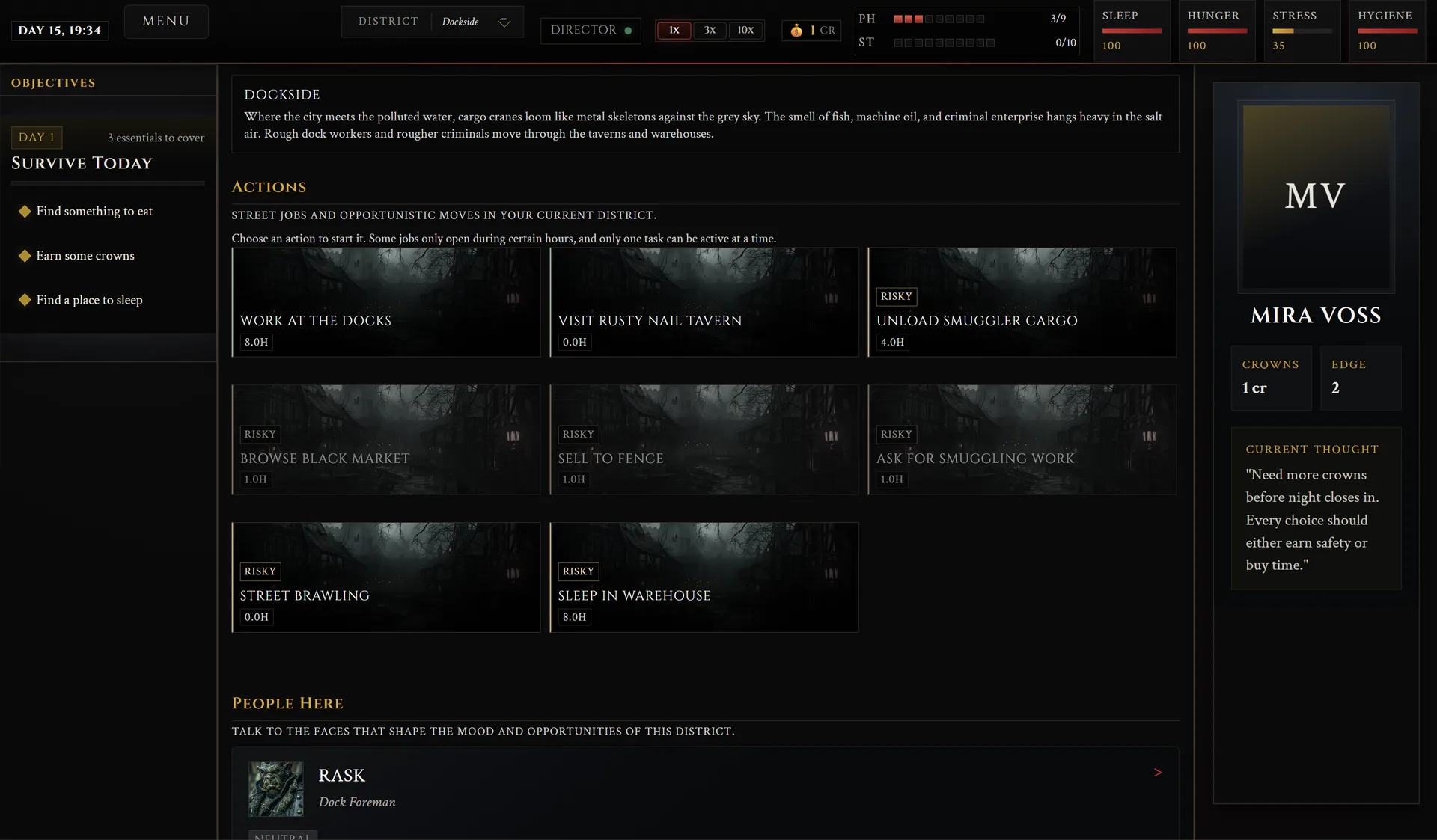
Dynamic quests, district-level world state, and NPCs who react to your reputation. Every choice shapes what opportunities appear next.
05The pipeline
Architect and Director are built to work together. One authors the narrative, one runs it.
Builds your narrative systems: quests, dialogue, structure. The authoring layer.
Learn about Architect →Runs them in real time: behavior, adaptation, emergence. The runtime layer.
You are hereDirector is not AI NPCs. It is a narrative runtime. It interprets player behavior and drives the story forward. Every session. Every choice. Every consequence.
Pricing
After launch, 1% of gross revenue above the first €100,000 per title
Enterprise licensing, a one-time buyout of the revenue share, SLA, and integration work by contact
See how Director transforms static game worlds into living narrative systems.
06Questions
Director is a runtime AI Game Master that reads your game state and makes constraint-validated narrative decisions in real time. It orchestrates NPC behavior, plot progression, and emergent events based on the world designed in Architect.
Traditional scripting is hand-authored. Every branch must be written and tested in advance. Director takes your world's rules, state, and goals, and generates narrative decisions at runtime that still respect every constraint you define. It handles the branches you didn't write.
No. Director runs entirely on-device, on the player's machine. No cloud dependency, no network calls, no player data leaves the game. This also means there are no per-token API fees.
Director is free while you build. After your game launches commercially, it takes 1% of gross revenue above the first 100,000 EUR per title. You pay nothing during development or for small releases. Enterprise licensing, a one-time buyout of the revenue share, SLA, and integration work are available on request. See pricing for the details.
Director integrates with Unreal Engine, Unity, Godot, and custom engines. It ships as middleware that reads game state and returns validated narrative parameter updates.
No. Every decision Director makes is validated against the constraints you define in Architect. If a proposed action would break your world's rules, it's rejected before it reaches your game. You define the boundaries; Director operates inside them.
Director works best with worlds designed in Architect because that's where constraints and entities are defined, but it can also consume custom JSON world files for advanced users.